
Field Meeting Report — Cogie Hill Nature Site on July 20 2026
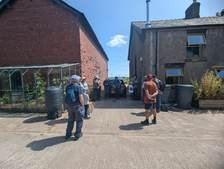
A group of members met at the farm in beautiful hot, sunny weather. The owner, Emma Whittaker gave a short introduction and we heard about how they were managing the land for wildlife. This included meadows, hedges, grazing for horses and a few mature trees.
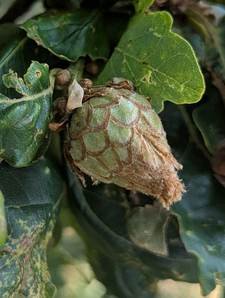
First, we explored a meadow which had a magnificent large oak tree in it. Malcolm Evans drew our attention to a Purple Hairstreak Butterfly flying around the canopy which made a few appearances and we saw numerous Oak Marble Galls on the twigs, which are caused by the gall wasp Andricus kollari. Hunting amongst the leaves were numerous Field Digger Wasps (Mellinus arvensis) which were searching for their prey, usually flies. They make burrows in sandy soil and provision them with these flies for their grubs to eat. Although we didn’t see their nest site on this visit, it was certainly nearby. While beating insects from the tree I found a couple of tiny soldier-flies, the Yellow-edged Black (Pachygaster leachii) which is only the second time it has been recorded in north Lancashire!
A fallen log nearby had the remains of an old bracket fungus, possible Sulphur Bracket. A close examination of this old fungus found a lot of adults and larvae of the rare beetle Eledona agricola, which has not been recorded before on the Fylde.
Butterflies were a real feature of the day. Meadow Brown Butterfly was common in the grassy areas, with Gatekeeper along the field hedges. Emma had left large areas of thistles in an area behind the farm, which were still flowering and absolutely swarming with butterflies, including Red Admiral, Painted Lady, Peacock, Small White, Small Skipper, Meadow Brown, Gatekeeper and Comma as well as many Silver Y moths.
In the hot sun we also saw a number of Black Darter dragonflies, which breed in acidic waters and are common on the nearby Winmarleigh Moss Nature Reserve.
This was a fascinating visit that demonstrated how well nature can do in an area managed sympathetically for wildlife. The Fylde area tends to lack a lot of good wild areas, so it will be interesting to see this farm develop in future.
Steve Garland
Species list
Lichens
- Ramalina farinacea
- Physcia adscendens
- Flavioparmelia soredians
- Parmelia sulcata
- Xanthoria parietina
- Punctelia subrudecta
Plants
- Yarrow – Achillea millefolium
- Wild Carrot – Daucus carota
- Hay Rattle – Rhinanthus minor
- Reed Canary-grass – Phalaris arundinacea
- Lady’s Bedstraw – Galium verum
Butterflies & moths
- Red Admiral
- Painted Lady
- Peacock
- Comma
- Small Skipper
- Gatekeeper
- Meadow Brown
- Purple Hairstreak
- Small White
- Large White
- Silver Y moth
- Pale Straw Pearl moth - Udea lutea
- Grass-moth – Agriphila straminella
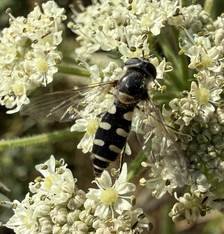
Flies - hoverflies
- Syritta pipiens
- Platycheirus peltatus
- Melanostoma mellinum
- Eristalis arbustorum
- Eristalis nemorum
- Eristalis tenax
Flies – others
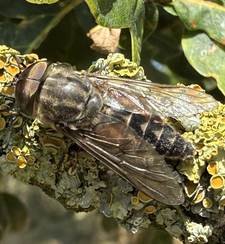
- Cleg – Haematopota pluvialis
- Yellow-edged Black – Pachygaster leachii
- Large Marsh Horsefly – Tabanus autumnalis
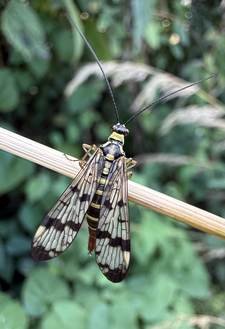
- Scorpionfly – Panorpa communis
- Bare-winged Halfband – Melangyna umbellatarum
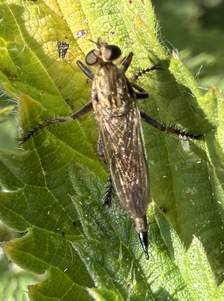
- Brown Heath Robberfly – Tolmeres cingulatus
Wasps
- Field Digger Wasp – Mellinus arvensis
- Common Wasp – Vespula vulgaris
- Potter Wasp – Ancistrocerus gazella
Beetles
- Soldier Beetle – Rhagonycha fulva
- Fungus beetle – Eledona agricola
Other insects
- Green Lacewing-fly – Chrysoperla carnea agg.
- Black Darter dragonfly – Sympetrum danae
- Artichoke gall - Andricus foecundatrix
- Oak Marble gall - Andricus kollari